UI/UX Design Course in Ahmedabad Job-Ready in 6 Months
Fingertips’ UI/UX design course in Ahmedabad is a six-month, live program for students, graduates and working professionals who want to design apps and websites. You learn user research, Figma, prototyping and AI design tools on 30+ real projects, build a job-ready portfolio, and get placement support. Classes run online and at our CG Road and SG Highway centres.

The full process, from user research to prototype
UI and UX practised together on real projects
Figma, Framer, AI design tools and placement support
Your Dream Career Is Just One Step Away


Key Highlights


UI/UX Design Course Curriculum
Curriculum
- What a UI/UX designer actually does, and who they work with in a product team
- How UI and UX differ, with simple examples
- Design thinking explained without the jargon
- The five stages: empathise, define, ideate, prototype, test
- What the design job market in India looks like right now
- Planning and running short user interviews
- Writing survey questions that don’t push people towards an answer
- Turning what you learn into user personas
- Mapping a user’s journey step by step, and spotting where they get stuck
- Working with hierarchy, alignment, contrast, spacing and consistency
- What makes a screen easy to scan and read
- Usability guidelines you’ll use on every project
- Explaining your design decisions so managers and developers get on board
- Why most product companies in India design in Figma
- Frames, layers and auto layout
- Components and variants
- Working with a team inside one shared Figma file
- Quick low-fidelity wireframes in Balsamiq
- Detailed wireframes in Figma
- Linking screens into a clickable prototype
- Trying your prototype on a real phone
- Choosing fonts that stay readable on budget Android phones
- Building colour palettes for light and dark mode
- Checking colour contrast so everyone can read your screens
- Creating a simple design system with reusable buttons, inputs and cards
- Designing for mobile and desktop screens
- The key Android (Material) and iOS design guidelines
- Responsive layouts that adapt to any screen size
- Galileo AI: turning a text prompt into editable screens
- Midjourney: quick moodboards and visual direction
- Dora.ai: animated web pages without writing code
- Claude: summarising research notes and drafting UX copy
- Where AI falls short, and what you still need to check yourself
- Writing microcopy for buttons, error messages, empty screens and onboarding
- Why "Book my slot" beats "Submit"
- Hands-on practice writing short, clear copy for real situations
- Testing your prototype with five real users
- Watching where they struggle, and noting it down without helping them
- Fixing the design based on what you saw
- Testing again to check the fixes worked
- Micro-interactions: button feedback, sliding cards and loading states
- Building interactions in Figma and Framer
- Using motion to guide the user
- Knowing when motion just gets in the way
- Task completion, drop-off and conversion rates
- Reading basic product analytics
- Showing, with numbers, whether a design change worked
- Designing for voice assistants
- Chat-based interfaces and chatbots
- Augmented reality (AR) basics
- Designing products with built-in AI features
- Turning your best projects into case studies
- Publishing your work on Behance and Dribbble
- Finding your first freelance clients
- Pricing projects and writing proposals
- Pick an existing app or website with real usability problems and redesign it
- Do the research, wireframes and design system yourself
- Build a prototype and test it with users
- Write it up as a full case study, the main piece in your portfolio
Module 1: Introduction to UI/UX Design
- What a UI/UX designer actually does, and who they work with in a product team
- How UI and UX differ, with simple examples
- Design thinking explained without the jargon
- The five stages: empathise, define, ideate, prototype, test
- What the design job market in India looks like right now
Module 2: Understanding Users and UX Research
- Planning and running short user interviews
- Writing survey questions that don’t push people towards an answer
- Turning what you learn into user personas
- Mapping a user’s journey step by step, and spotting where they get stuck
Module 3: The Design Process and Principles
- Working with hierarchy, alignment, contrast, spacing and consistency
- What makes a screen easy to scan and read
- Usability guidelines you’ll use on every project
- Explaining your design decisions so managers and developers get on board
Module 4: Introduction to Figma
- Why most product companies in India design in Figma
- Frames, layers and auto layout
- Components and variants
- Working with a team inside one shared Figma file
Module 5: Wireframing and Prototyping with Figma
- Quick low-fidelity wireframes in Balsamiq
- Detailed wireframes in Figma
- Linking screens into a clickable prototype
- Trying your prototype on a real phone
Module 6: Typography, Colour and Design Systems
- Choosing fonts that stay readable on budget Android phones
- Building colour palettes for light and dark mode
- Checking colour contrast so everyone can read your screens
- Creating a simple design system with reusable buttons, inputs and cards
Module 7: Mobile and Web UI Design
- Designing for mobile and desktop screens
- The key Android (Material) and iOS design guidelines
- Responsive layouts that adapt to any screen size
Module 8: AI Tools for Designers
- Galileo AI: turning a text prompt into editable screens
- Midjourney: quick moodboards and visual direction
- Dora.ai: animated web pages without writing code
- Claude: summarising research notes and drafting UX copy
- Where AI falls short, and what you still need to check yourself
Module 9: UX Writing and Microcopy
- Writing microcopy for buttons, error messages, empty screens and onboarding
- Why "Book my slot" beats "Submit"
- Hands-on practice writing short, clear copy for real situations
Module 10: Usability Testing and Feedback
- Testing your prototype with five real users
- Watching where they struggle, and noting it down without helping them
- Fixing the design based on what you saw
- Testing again to check the fixes worked
Module 11: Advanced Prototyping and Motion
- Micro-interactions: button feedback, sliding cards and loading states
- Building interactions in Figma and Framer
- Using motion to guide the user
- Knowing when motion just gets in the way
Module 12: UX Metrics and Analytics
- Task completion, drop-off and conversion rates
- Reading basic product analytics
- Showing, with numbers, whether a design change worked
Module 13: Design for Emerging Technologies
- Designing for voice assistants
- Chat-based interfaces and chatbots
- Augmented reality (AR) basics
- Designing products with built-in AI features
Module 14: Portfolio Development and Freelancing
- Turning your best projects into case studies
- Publishing your work on Behance and Dribbble
- Finding your first freelance clients
- Pricing projects and writing proposals
Module 15: Capstone Project
- Pick an existing app or website with real usability problems and redesign it
- Do the research, wireframes and design system yourself
- Build a prototype and test it with users
- Write it up as a full case study, the main piece in your portfolio
Tools Specialization

Figma
- • Use: Designing screens, building prototypes and handing them to developers
- • Why Important: It’s the tool most Indian product companies hire for

Framer
- Use: Prototypes that feel close to a real, working website
- Why Important: Lets you go further with motion and interactions than Figma alone
Balsamiq
- Use: Fast, rough wireframes at the very start of a project
- Why Important: Keeps early feedback on layout and flow instead of colours
Galileo AI
- Use: Generating editable UI screens from a short text prompt
- Why Important: Helps you try out several layout ideas quickly
Midjourney
- Use: Moodboards and early visual direction
- Why Important: Helps everyone agree on a look and feel before screens are designed
Dora.ai
- Use: Building animated websites without code
- Why Important: Turns a design idea into a live, animated page

Claude
- Use: Summarising user interviews and drafting microcopy
- Why Important: Saves hours on research notes and writing
Building Your Career Foundation
- The 7 Cs of Effective Business Communication
- Spoken English for the Workplace
- Fixing Common Grammar Mistakes in Emails and Case Studies
- Body Language
- Presenting Your Design to a Team
- Effective Email Writing
- Handling Client Calls with Confidence
- Building a Professional Network
- Resume Building
- LinkedIn Profile Creation
- Behance and Dribbble Profile Building
- How Design Interviews Work
- Portfolio Walkthrough Practice
- Design Review and Critique Sessions
- HR Interview
- Mock Interviews
- Interview Guides for Specific Companies
- Figma Refresher and Shortcuts
- Design System and Component Practice
- Timed Design Challenges on Real Products
- Case Study Assignments
Congratulations! You’re Ready to Start Your Career as a UI/UX Designer




Who Can Apply for This UI/UX Course?
Final-year graduation or post-graduation students from any stream
Recent graduates who enjoy design and technology
Working professionals, such as graphic designers, developers, testers and marketers, who want to move into UI/UX
You don’t need drawing skills or any software experience
All you need is curiosity about how people use apps, and time to practise
Who can apply for this course?
Final-year graduation or post-graduation students from any stream.
Recent graduates who enjoy design and technology.
Working professionals who want to switch to a UI/UX role.
Get Certified with Fingertips

Certificate
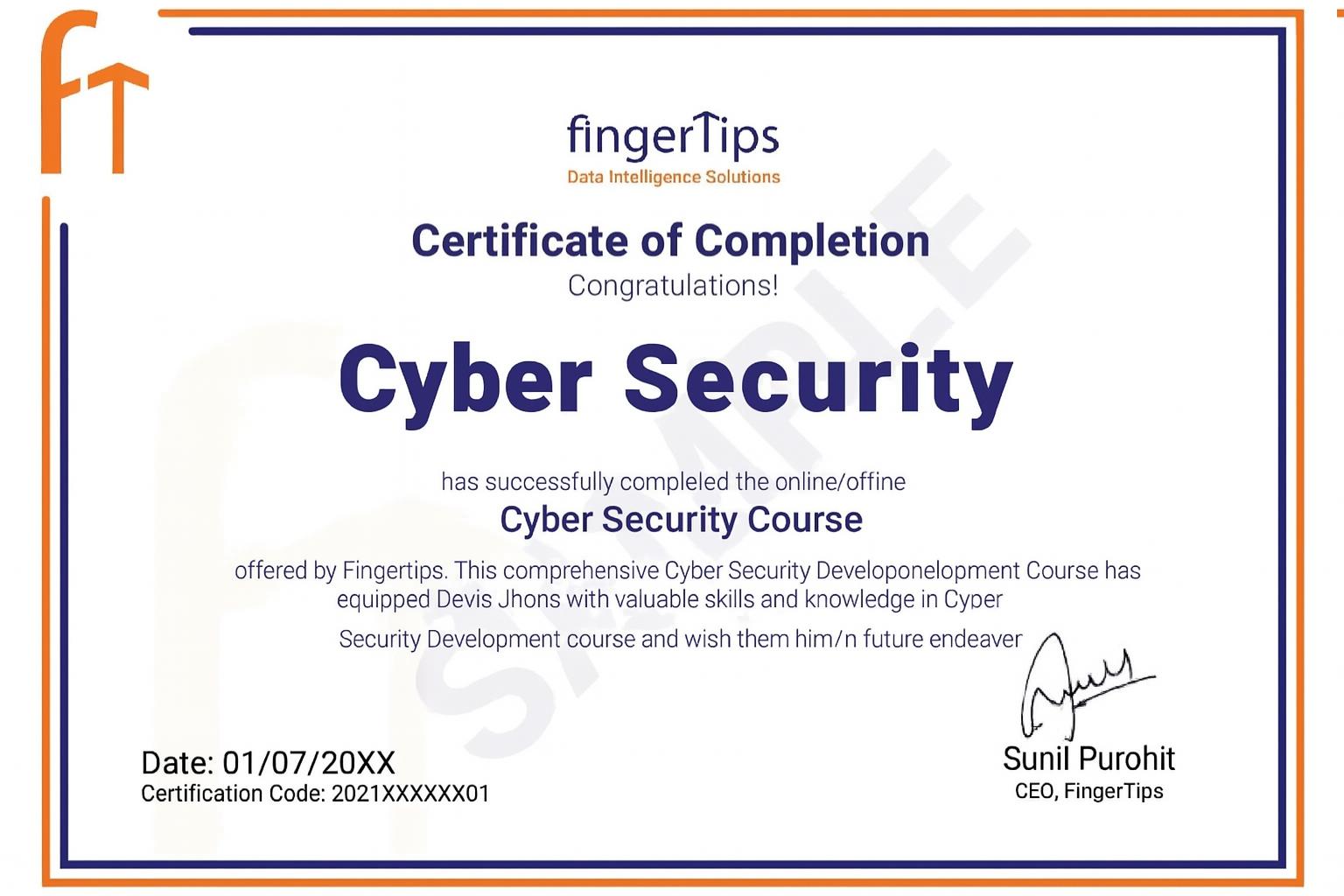
Finish the course and your capstone project, and you’ll receive a certificate of completion from Fingertips.

Credible
Over 15,000 learners have trained with Fingertips, and many recruiters in Ahmedabad know the name. Your certificate shows you completed a six-month, project-based program, not a weekend workshop.

Shareable
Add it to LinkedIn and link it from your Behance portfolio. Recruiters will look at your portfolio first, and the certificate backs it up.
Get all your queries answered with these FAQs
Course details last reviewed: October 2026

Book a free career call
Talk 1:1 to our experts — course fit, roadmap & placements.
- 100% free 1:1 counselling
- Personalised career roadmap
- Placement & salary guidance


Request a call back
Drop your details — we'll call you within 24 hours.
Your details are 100% safe. No spam.